
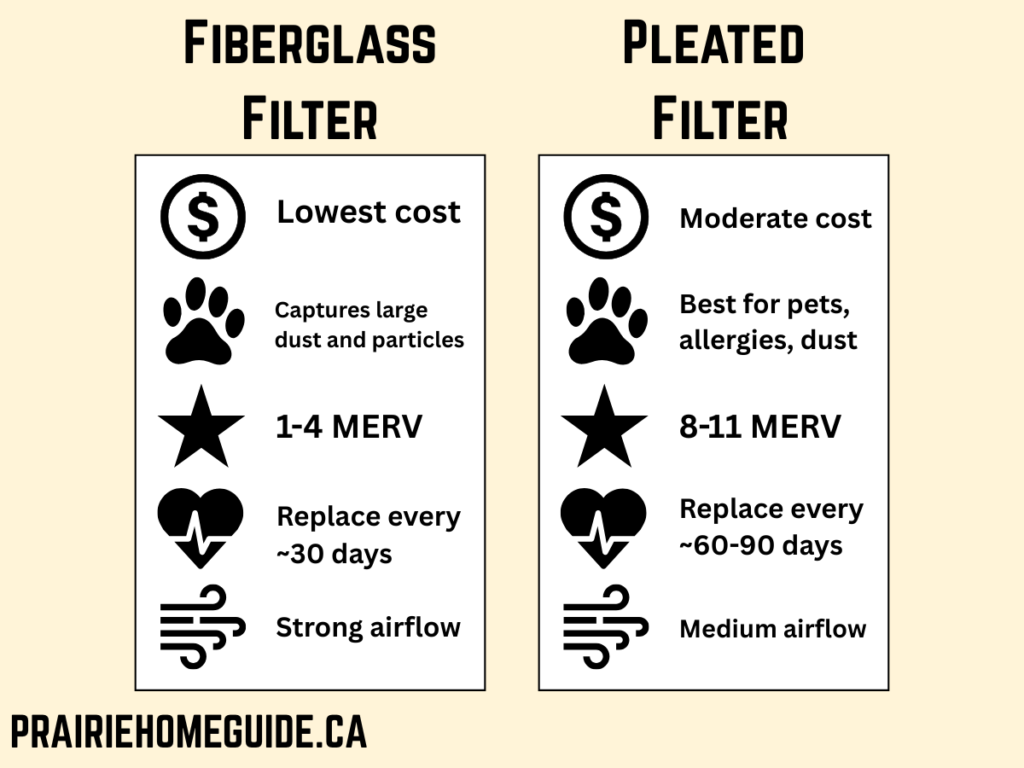
If you’re asking whether fiberglass vs pleated furnace filters are better today, the short answer is that pleated furnace filters are the best choice for most homes. Pleated furnace filters trap significantly more dust, particles, and pollen than fiberglass furnace filters. They increase your HVAC system’s lifespan and reduce overall maintenance costs by keeping your system cleaner. For most Canadians, a pleated furnace filter with a MERV rating between 8 and 11 is best as it balances airflow, filtering, and cost.
Fiberglass furnace filters are much cheaper than pleated filters, although they only catch larger debris from entering your furnace. Homeowners on a small budget, rentals, and older HVAC systems often benefit from using fiberglass filters for their cheap cost.
What is a Fiberglass Furnace Filter?
A fiberglass furnace filter is the most simple type of air filter. Fiberglass filters are extremely cheap, at most being $5. They’re only made of thin layers of spun fiberglass with a cardboard frame for support. Fiberglass filters are simply made to protect your furnace. Unlike pleated filters, they don’t improve the quality of air, but only stop larger particles from passing through.
Fiberglass furnace filters are most commonly used for older HVAC systems or by people on a tight budget. Because of their lower quality construction, fiberglass filters need to be changed around every 30 days. Fiberglass filters generally have a MERV rating of 1-4 and provide very little airflow restriction.
What is a Pleated Furnace Filter?
Pleated furnace filters are the standard filter choice for most homes in Canada. Pleated filters are more expensive than fiberglass ones. Filters with a lower MERV rating around 8 are at most $20, and filters with a higher rating are at most $50. Pleated filters are made with folded material to create more surface area to filter than fiberglass filters. The pleats allow much smaller particles to be caught, improving air quality, while still keeping good airflow.
Pleated filters are the standard choice today in most modern homes because they protect heating systems from dust buildup and improve air quality. They only need to be changed around every 60-90 days and are best for preventing dust and allergens from passing through.
Fiberglass vs Pleated Furnace Filter Comparison
Quick Comparison
| What’s better? | Fiberglass | Pleated |
| Filtering | Low | High |
| Airflow | High | Good |
| Lifespan | 30 days | 60-90 days |
| Cost | ~$3 to $10 | ~$15 to $30 |
| Allergy protection | Bad | Good |
| Pets | Bad | Excellent |
| HVAC protection | Low | Good |
| Uses | Budget, temporary housing, etc | Modern home, business, etc |
Pros and Cons
Fiberglass pros and cons
Pros:
- Affordable
- Much airflow
- Easy to find
- Protects furnace
- Best for older HVAC systems
Cons:
- Only catches larger dust and lint
- Doesn’t improve air quality
- Needs to be replaced often
Pleated pros and cons
Pros:
- Improves air quality
- Catches small particles
- Protects furnace best
- Less often replacement
Cons:
- Higher cost
- Can put strain on older HVAC systems
- May get clogged if not replaced enough
Which Filter is Right for You?
Best furnace filter if you have allergies
Although a pleated filter with a MERV rating of 8-11 will work, choosing something between 11-13 will be best for allergies. Higher rated filters capture pollen, mold spores, and allergens much better than lower rated pleated filters or fiberglass filters.
Best furnace filter if you have pets
A pleated furnace filter with a MERV rating of 8-11 will be best if you have pets. Anything lower may allow shed pet fur to build up in the furnace.
Best furnace filter for a tight budget
Fiberglass filters are your best choice if you are on a tight budget. They can protect your furnace just fine if you remember to replace them regularly and you don’t have excess pet dander or dust. If you have allergies or pets, it might be worth considering a higher quality pleated filter.
Best furnace filter for older furnaces
Older furnaces work best with fiberglass filters. Pleated filters with a lower MERV rating around 6-8 can also work well. A filter that restricts airflow too much can place strain on older HVAC systems.
Best furnace filter for clean indoor air
A pleated furnace filter will be your best choice for improving indoor air quality in your home. A pleated filter with a MERV rating of 8-11 will give you a noticeable increase in air quality while still being affordable and maintaining good airflow.
Cost Comparison Over Time
Even though fiberglass filters are cheaper than pleated filters, because they need to be replaced more frequently, they may not save you as much money as it seems at face value. Pleated furnace filters will generally provide you better air filtering and furnace protection for your money than fiberglass filters.
| Filter | Average price | Replacements per year | Average annual cost |
| Fiberglass | $3 to $10 | 12 | $36 to $120 |
| Pleated | $15 to $30 | 6 | $90 to $180 |
Frequently Asked Questions
Does a higher MERV rating always mean better filtration?
Yes, a higher MERV rating means that a filter can capture smaller particles. Before using a filter with a high MERV rating, make sure your furnace is designed to handle it, as it may put strain on your HVAC system.
Can a pleated filter damage my furnace?
If your furnace is designed to handle pleated furnace filters, then there is no risk in using them. Pleated and higher rated filters can harm older furnaces by putting strain on the furnace blower with less airflow.
Are fiberglass filters bad for indoor air quality?
Fiberglass filters don’t lower air quality, but they simply don’t remove any smaller particles in the air. Fiberglass filters are only intended to protect the furnace itself, not improve air quality.
Which filter type is more eco-friendly?
Because furnace filters need to be replaced consistently, they aren’t very eco-friendly. Overall, pleated filters are more eco-friendly than fiberglass filters because they need to be changed less often. Although they’re uncommon, washable furnace filters also exist.
How often should you change your pleated furnace filter?
Pleated furnace filters should generally be changed every 60-90 days. If you have pets, allergies, or doing renovations, consider checking your filter every 30-60 days. If you’re unsure whether your furnace filter needs to be changed, many factors can make a difference. Our complete guide on How Often Should You Change Your Furnace Filter? explains exactly how to find how often you should change your filter based on your needs and circumstances.
Final Verdict
For most Canadians, a pleated furnace filter will be the best choice. They provide high quality filtration and improve air quality while still being affordable. Using pleated filters will also help protect your HVAC system and increase its lifespan. Fiberglass filters are still a reasonable choice if you’re on a small budget or are using an older furnace.
